Category: Learn French

  • French Verb Manger Conjugation: Pinterest Challenge Unlocked!”

    🔓 Unlocked Answers: French Verb Manger Pinterest Challenge
    Here are the official correct answers to our viral Pinterest grammar quiz for the verb Manger (To Eat). Check if you got them right!
    1. “I would eat” ➡️ Je mangerais (Conditionnel Présent)
    2. “I would have eaten” ➡️ J’aurais mangé (Conditionnel Passé)

    📊 Quick Reference Conjugation Table
    English Meaning French Conjugation Tense Name Complexity Level
    I eat / I am eating Je mange Présent Beginner
    I ate / I have eaten J’ai mangé Passé Composé Beginner
    I will eat Je mangerai Futur Simple Intermediate
    I would eat Je mangerais Conditionnel Présent Advanced
    I would have eaten J’aurais mangé Conditionnel Passé Advanced

    📚 Deep Dive Grammar Rule: How to Form These Tenses
    Understanding the formula behind these advanced conjugations will help you apply the same rules to hundreds of other regular -ER verbs in the French language.
    ⚡ 1. How to form the Conditional Present (Je mangerais)
    To form the Conditionnel Présent, you take the Future Tense Stem of the verb and add the Imperfect Tense Endings (-ais, -ais, -ait, -ions, -iez, -aient).
    • For the verb Manger, the future stem is exactly the same as the infinitive form: manger-.
    • For the subject pronoun Je (I), the required imperfect ending is -ais.
    • Combining them together gives you: manger + ais = Je mangerais.
    • When to use: Use this when you are talking about a hypothetical situation in the present or future timeline (e.g., “I would eat pizza if I wasn’t on a strict diet”).
    ⚡ 2. How to form the Conditional Past (J’aurais mangé)
    The Conditionnel Passé is a compound tense, meaning it always requires a combination of two words. You need the Conditional Present form of the auxiliary verb (usually Avoir or Être) followed by the Past Participle of your main verb.
    • For the verb Manger, we must use Avoir as the helping verb. The conditional present form of Avoir for the subject Je is j'aurais.
    • The past participle form of Manger is simply mangé.
    • Combining them together gives you: J’aurais mangé.
    • When to use: Use this to express past regret or an action that would have happened in the past but ultimately did not (e.g., “I would have eaten the fresh cake, but my brother took it all”).

    🧠 Bonus Practice Quiz: Test Your French Skills!
    Now that you know the rules for the subject pronoun Je (I), try to guess the correct forms for other subjects. Test yourself below:
    Question 1: How do you say “We would eat” in French?
    • Answer: Nous mangerions (We take the stem ‘manger-‘ and add the ending ‘-ions’)
    Question 2: How do you say “They would have eaten” (Masculine Plural) in French?
    • Answer: Ils auraient mangé (We use the plural conditional form ‘ils auraient’ + past participle ‘mangé’)
    Question 3: Why is ‘Manger’ called a regular -ER verb?
    • Answer: Because it follows the standard pattern for verbs ending in -ER, though it keeps an extra ‘e’ before ‘o’ and ‘a’ (like nous mangeons) to maintain the soft ‘g’ pronunciation sound.

    💡 Subtle Pronunciation Nuance to Remember
    Notice how the spelling and pronunciation of Je mangerai (Future) and Je mangerais (Conditional) are extremely close. The key difference lies in the final vowel sound. Native French speakers slightly round out the ending sound of mangerais to distinguish it from the future tense. Always practice listening to native audio recordings to accurately catch this subtle linguistic nuance!

    🇫🇷 Final Thoughts: Keep Practicing!
    Mastering French verb conjugations is all about consistency, not cramming. Advanced tenses like the Conditionnel Présent or Conditionnel Passé might seem tricky at first glance, but once you start recognizing the underlying patterns, they become second nature.
    Instead of mindlessly memorizing endless textbook tables, focus on mastering just one verb at a time and using it in real, practical everyday sentences.
    If you enjoyed this quick vocabulary challenge, make sure to bookmark our website! We regularly post exciting interactive quizzes, native pronunciation hacks, and bite-sized grammar breakdowns to help you level up your French fluency effortlessly.
    Bonne chance (Good luck) on your French language journey, and see you in the next challenge! 🚀✨
  • 10 Essential French Furniture Words Every Beginner Gets Wrong

    Learning a new language is always an exciting journey, but it comes with its own set of rules and challenges. When you start learning French, one of the first conversational topics you will explore is home and furniture (Les meubles). However; many beginners make silly mistakes with French furniture words—either by getting the genders (Le/La) wrong or by using incorrect English-style translations.

    In this comprehensive guide, we will break down the top 10 essential French furniture words, how to pronounce them correctly using English phonetic sounds, the common mistakes to avoid, and how to use them in daily life conversations.

    1. Sofa (The Couch)
    • Correct French: Le canapé (Masculine)
    • Pronunciation Guide: luh ka-na-pay
    • Common Beginner Mistake: Many beginners literally translate it and say “Le Sofa”. While ‘Sofa’ is sometimes understood in conversational French, Le canapé is the standard, correct, and most natural word to use.
    • Example Sentence: J’aime ce canapé blanc. (I like this white sofa.)
    2. Bed
    • Correct French: Le lit (Masculine)
    • Pronunciation Guide: luh lee (The final ‘t’ is completely silent)
    • Common Beginner Mistake: Beginners often make a pronunciation error here by pronouncing the letter ‘T’ at the end. In French, the final consonants are usually silent. It should sound like “Lee”, not “Lit”.
    • Example Sentence: Le lit est très confortable. (The bed is very comfortable.)
    3. Chair
    • Correct French: La chaise (Feminine)
    • Pronunciation Guide: lah shez
    • Common Beginner Mistake: Mixing up the gender and calling it “Le chaise”. Chairs are feminine in French grammar, so always use the article “La” or “Une”.
    • Example Sentence: Assieds-toi sur la chaise. (Sit on the chair.)
    4. Table
    • Correct French: La table (Feminine)
    • Pronunciation Guide: lah tah-bluh
    • Common Beginner Mistake: The spelling is exactly the same as English, which makes it easy, but people often get confused with the gender. It is strictly feminine.
    • Example Sentence: Mettez les assiettes sur la table. (Put the plates on the table.)
    5. Desk / Study Table
    • Correct French: Le bureau (Masculine)
    • Pronunciation Guide: luh byu-roh
    • Common Beginner Mistake: In English, “Bureau” usually means an office or a department (like the FBI). But in French, Le bureau refers to both the physical office room and the actual desk you work on.
    • Example Sentence: Mon ordinateur est sur le bureau. (My computer is on the desk.)
    6. Wardrobe / Closet
    • Correct French: L’armoire (Feminine)
    • Pronunciation Guide: lahr-mwar
    • Common Beginner Mistake: Because it starts with a vowel, we use L’, which confuses beginners about its actual gender. It is a feminine noun, so if you use an adjective, it must be feminine (e.g., Une grande armoire).
    • Example Sentence: Mes vêtements sont dans l’armoire. (My clothes are in the wardrobe.)
    7. Armchair
    • Correct French: Le fauteuil (Masculine)
    • Pronunciation Guide: luh foh-toy
    • Common Beginner Mistake: Pronunciation is the biggest hurdle here. The spelling “-euil” is tricky for native English speakers. Also, do not mistake it for a regular chair (la chaise); an armchair is masculine.
    • Example Sentence: Mon grand-père lit dans le fauteuil. (My grandfather reads in the armchair.)
    8. Bookshelf / Shelf
    • Correct French: L’étagère (Feminine)
    • Pronunciation Guide: lay-tah-zher
    • Common Beginner Mistake: Beginners often mix up an armoire (closet) with an étagère (open shelf). It is feminine, and the final ‘e’ is soft.
    • Example Sentence: Il y a beaucoup de livres sur l’étagère. (There are many books on the shelf.)
    9. Mirror
    • Correct French: Le miroir (Masculine)
    • Pronunciation Guide: luh meer-war
    • Common Beginner Mistake: Pronouncing it exactly like English or getting confused by the “oi” sound which sounds like “wa” in French.
    • Example Sentence: Elle se regarde dans le miroir. (She looks at herself in the mirror.)
    10. Drawer / Chest of Drawers
    • Correct French: Le tiroir (Masculine) / La commode (Feminine)
    • Pronunciation Guide: luh teer-war / lah koh-mod
    • Common Beginner Mistake: Calling a piece of furniture with drawers a “box”. In French, a single drawer is Le tiroir, and the whole cabinet unit is La commode.
    • Example Sentence: Les clés sont dans le tiroir. (The keys are in the drawer.)

    Quick Comparison Table for Daily Revision
    To make it easy for you to remember, here is a quick summary table of all the French furniture words we covered today:
    English Word Correct French Word Grammatical Gender Common Mistakes to Avoid
    Sofa / Couch Le canapé Masculine Saying “Le Sofa”
    Bed Le lit Masculine Pronouncing the final ‘T’
    Chair La chaise Feminine Using the masculine “Le”
    Table La table Feminine Getting confused by English spelling
    Desk Le bureau Masculine Thinking it only means an office
    Wardrobe L’armoire Feminine Forgetting it is a feminine noun
    Armchair Le fauteuil Masculine Difficult pronunciation errors
    Bookshelf L’étagère Feminine Confusing it with a closed closet
    Mirror Le miroir Masculine Pronouncing “oi” the wrong way
    Drawer Le tiroir Masculine Misusing the word for a regular box

    Summary and Grammar Tip
    The golden rule of learning French vocabulary is to always learn the noun along with its article (Le/La or Un/Une). Never just memorize “lit = bed”. Always memorize it as “Le lit”. This simple habit will save you from 90% of basic grammatical mistakes when building French sentences in the future.
    Test Your Knowledge!
    Now it’s your turn to practice. Leave a comment down below and tell us: How do you say “The chair is next to the table” in French? Let’s see who gets the genders right!
  • French Numbers 1 to 20: Counting for Beginners (with Pronunciation Guide)

    Are you starting your French learning journey?

    Then learning numbers 1 to 20 should be one of your first goals. 🔢

    Why?

    Because numbers appear everywhere in real life.

    You need them when you:

    ☕ Order something at a café
    💶 Ask about a price
    🎂 Tell someone your age
    📱 Give your phone number
    🕐 Talk about time
    🛍️ Go shopping

    And the good news?

    You don’t need to memorise a huge list of complicated French words.

    Start with 1 to 20.

    Once these numbers become familiar, you’ll have a strong foundation for learning bigger numbers later.


    👀 Before We Start…

    French numbers are much easier when you see them, say them, and use them.

    So don’t just read this list silently.

    Try saying each number out loud.

    You’ll see:

    French → English → Easy pronunciation

    Let’s begin!


    🔢 French Numbers 1 to 20

    1 — Un

    English: One
    Pronunciation: uhn


    2 — Deux

    English: Two
    Pronunciation: duh


    3 — Trois

    English: Three
    Pronunciation: trwah


    4 — Quatre

    English: Four
    Pronunciation: katr


    5 — Cinq

    English: Five
    Pronunciation: sank


    6 — Six

    English: Six
    Pronunciation: sees


    7 — Sept

    English: Seven
    Pronunciation: set


    8 — Huit

    English: Eight
    Pronunciation: weet


    9 — Neuf

    English: Nine
    Pronunciation: nuf


    10 — Dix

    English: Ten
    Pronunciation: dees


    11 — Onze

    English: Eleven
    Pronunciation: onz


    12 — Douze

    English: Twelve
    Pronunciation: dooz


    13 — Treize

    English: Thirteen
    Pronunciation: trez


    14 — Quatorze

    English: Fourteen
    Pronunciation: kah-torz


    15 — Quinze

    English: Fifteen
    Pronunciation: kanz


    16 — Seize

    English: Sixteen
    Pronunciation: sez


    17 — Dix-sept

    English: Seventeen
    Pronunciation: dees-set


    18 — Dix-huit

    English: Eighteen
    Pronunciation: deez-weet


    19 — Dix-neuf

    English: Nineteen
    Pronunciation: dees-nuf


    20 — Vingt

    English: Twenty
    Pronunciation: van


    🧠 Did You Notice the Pattern?

    Look at these three:

    17 → dix-sept

    18 → dix-huit

    19 → dix-neuf

    There’s a simple pattern hiding here.

    dix = 10

    So:

    dix + sept = 17

    dix + huit = 18

    dix + neuf = 19

    Once you notice this, 17, 18, and 19 become much easier to remember.


    🎯 Quick Memory Challenge

    Without looking back, can you complete these?

    17 = dix-_____

    18 = dix-_____

    19 = dix-_____

    Think for a few seconds…

    👇

    👇

    👇

    ✅ Answers

    17 → dix-sept

    18 → dix-huit

    19 → dix-neuf

    How many did you remember? 😎


    📅 Want Another Essential French Vocabulary Lesson?

    Numbers aren’t the only everyday French words you’ll use constantly.

    The days of the week are just as important when talking about plans, appointments, school, work, travel, and everyday life.

    👉 [Days of the Week in French: Complete Guide to Les Jours de la Semaine]

    Learn Monday to Sunday in French with pronunciation, meanings, and easy examples.


    🗣️ How to Use French Numbers in Real Life

    Knowing the numbers is great.

    But knowing how to use them in a real conversation is even better.

    Let’s look at three situations where you’ll use French numbers almost immediately.


    ☕ 1. Asking About a Price

    Imagine you’re shopping in France.

    You see something you like, but you don’t know the price.

    You can ask:

    C’est combien ?

    Meaning: How much is it?
    Pronunciation: say kom-byahn?

    The answer might be:

    C’est dix euros.

    Meaning: It’s ten euros.
    Pronunciation: say deez uh-roh

    Now you can understand one of the most useful number situations in French.


    🎂 2. Telling Your Age

    Here’s an important French grammar difference.

    In English, we say:

    I am 20 years old.

    But French uses the verb avoir, meaning “to have.”

    So you say:

    J’ai vingt ans.

    Meaning: I am 20 years old.
    Literally: I have 20 years.

    Pronunciation: zhay van ahn

    So remember:

    ❌ Don’t translate the English structure word-for-word.

    ✅ French uses avoir for age.


    ☕ 3. Ordering at a Café

    Imagine you’re sitting in a French café.

    You want two coffees.

    You can say:

    Deux cafés, s’il vous plaît.

    Meaning: Two coffees, please.

    Pronunciation: duh kah-fay, seel voo pleh

    Now you’re using a number in an actual French situation.

    And that’s much more useful than simply memorising:

    Deux = Two


    🎮 Your Turn: What Would You Say?

    Imagine you’re at a café.

    You want three coffees.

    Which one sounds correct?

    A) Trois cafés, s’il vous plaît.

    B) Trois café, s’il vous plaît.

    Think carefully.

    👇

    👇

    👇

    ✅ Answer: A

    Trois cafés, s’il vous plaît.

    Three coffees, please.

    You’re not just learning numbers anymore.

    You’re using them. 🇫🇷


    ⚠️ 3 Things Beginners Often Get Wrong

    French numbers look simple, but pronunciation can be tricky.

    Here are three things worth remembering.


    1️⃣ Don’t assume every final letter is pronounced

    French spelling and pronunciation don’t always work the way English spelling does.

    For example:

    vingt

    The final letters are not pronounced in the same way you might expect from the spelling.

    For a beginner-friendly approximation:

    vingt → van


    2️⃣ Six and dix can change pronunciation

    This is an important detail.

    The pronunciation of six and dix can vary depending on what comes after them.

    For example:

    six can sound like sees when said on its own.

    dix can sound like dees when said on its own.

    But don’t worry about mastering every pronunciation variation on day one.

    First, become comfortable recognising the numbers.

    Then you can refine your pronunciation as you progress.


    3️⃣ Some French numbers contain nasal sounds

    Numbers such as:

    un

    cinq

    vingt

    contain French sounds that don’t have an exact English equivalent.

    Don’t worry if they don’t sound perfect immediately.

    Listen, repeat, and practise.

    Your pronunciation will improve with exposure.


    🧠 3 Easy Tricks to Memorise French Numbers

    Memorising numbers doesn’t have to feel like studying a boring vocabulary list.

    Try these tricks instead.


    💡 Trick #1: Learn Them in Groups

    Don’t try to memorise all 20 at once.

    Start with:

    1–5

    Then:

    6–10

    Then:

    11–15

    Finally:

    16–20

    Small groups are easier for your brain to remember.


    💡 Trick #2: Count Things Around You

    Look around your room.

    Can you find five books?

    Say:

    cinq livres

    Five books.

    See three chairs?

    trois chaises

    Three chairs.

    Have two phones?

    deux téléphones

    Two phones.

    The goal is simple:

    Turn everyday objects into French practice.


    💡 Trick #3: Say Numbers Out Loud

    Don’t only read:

    un, deux, trois, quatre…

    Say them.

    Then try counting without looking.

    1 → 2 → 3 → 4 → 5

    Then:

    6 → 7 → 8 → 9 → 10

    Then continue to 20.

    Even 2–3 minutes of daily practice can help make the numbers feel automatic.


    🎯 Can You Count Backwards?

    Here’s a harder challenge.

    Try saying:

    10 → 9 → 8 → 7 → 6 → 5 → 4 → 3 → 2 → 1

    in French.

    No cheating! 😄

    If you can do that comfortably, you’re starting to move beyond simple memorisation.


    🏆 Quick French Numbers Quiz

    Let’s see what you remember.

    1. What is “7” in French?

    A) six
    B) sept
    C) huit

    2. What is “12” in French?

    A) onze
    B) douze
    C) treize

    3. What is “15” in French?

    A) quinze
    B) seize
    C) quatorze

    4. What is “19” in French?

    A) dix-huit
    B) dix-neuf
    C) dix-sept

    5. What is “20” in French?

    A) vingt
    B) vingt-deux
    C) dix


    🎯 Answers

    1. B — sept ✅

    2. B — douze ✅

    3. A — quinze ✅

    4. B — dix-neuf ✅

    5. A — vingt ✅


    🏅 What’s Your Score?

    5/5 🔥

    Excellent! You know your French numbers.

    3–4/5 👍

    Very good! Review the numbers you missed.

    1–2/5 💪

    No problem. Read the chart again and practise aloud.

    0/5 😄

    Time for a second round!


    📌 French Numbers 1–20: Quick Cheat Sheet

    1 — un
    uhn

    2 — deux
    duh

    3 — trois
    trwah

    4 — quatre
    katr

    5 — cinq
    sank

    6 — six
    sees

    7 — sept
    set

    8 — huit
    weet

    9 — neuf
    nuf

    10 — dix
    dees

    11 — onze
    onz

    12 — douze
    dooz

    13 — treize
    trez

    14 — quatorze
    kah-torz

    15 — quinze
    kanz

    16 — seize
    sez

    17 — dix-sept
    dees-set

    18 — dix-huit
    deez-weet

    19 — dix-neuf
    dees-nuf

    20 — vingt
    van

    🇫🇷 Final Challenge

    Close your eyes for a moment.

    Can you say these in French?

    3

    7

    11

    15

    18

    20

    If you can, you’re making progress.

    And remember:

    Don’t just memorise French numbers.

    Use them. Speak them. Repeat them.

    That’s how vocabulary moves from your memory into real conversation.

    🇫🇷 Bon courage et bonne pratique!

  • 10 French Verbs Every Beginner Must Know + Easy Examples & Audio

    Starting French can feel overwhelming. There are hundreds of French verbs, and it can be difficult to know which ones you should learn first.

    The good news is that you don’t need to memorize hundreds of verbs to start building simple French sentences.

    In this beginner-friendly guide, you’ll learn 10 essential French verbs with simple everyday examples, English meanings, pronunciation help, and audio.

    Listen → Repeat → Practice → Test Yourself

    📚 What You’ll Learn

    By the end of this lesson, you’ll know:

    • ✅ 10 essential French verbs
    • ✅ Their English meanings
    • ✅ Simple everyday French sentences
    • ✅ Audio pronunciation
    • ✅ Easy memory tips
    • ✅ Quick practice questions
    • ✅ A 5-minute final challenge

    ⏱️ Estimated learning time: 5–10 minutes

    🔎 Jump to a Verb

    1. Être · 2. Avoir · 3. Aller · 4. Faire · 5. Dire

    6. Pouvoir · 7. Vouloir · 8. Venir · 9. Voir · 10. Prendre


    1. Être (To be)

    • Meaning: To be
    • Pronunciation: eh-tr

    💬 Everyday Example

    🇫🇷 Je suis étudiant.

    🇬🇧 I am a student

    🔊 Listen & Repeat

    Listen to the sentence and repeat it aloud 2–3 times.

    🧠 Easy Memory Tip

    Être = To be

    Je suis = I am

    ❓ Quick Check

    What does “Je suis” mean?

    A) I have
    B) I am
    C) I go

    Answer: B — I am ✅

    2. Avoir (To have)
    • Meaning: To have
    • Pronunciation: ah-vwar

    💬 Everyday Example

    🇫🇷 J’ai un livre.

    🇬🇧 I have a book

    🔊 Listen & Repeat

    Listen carefully and repeat the sentence aloud.

    🧠 Easy Memory Tip

    Avoir = To have

    J’ai = I have

    💡 Useful Expression

    French often uses avoir (to have) when English uses “to be.”

    For example:

    🇫🇷 J’ai 20 ans.

    🇬🇧 I am 20 years old.

    Literally, French says “I have 20 years.”

    3. Aller (To go)
    • Meaning: To go
    • Pronunciation: ah-lay

    💬 Everyday Example

    🇫🇷 Je vais à l’école.

    🇬🇧 I am going to school.

    🔊 Listen & Repeat

    Repeat the sentence aloud and pay attention to vais.

    🧠 Easy Memory Tip

    Aller = To go

    Je vais = I go / I am going

    ❓ Quick Check

    Complete the sentence:

    Je ___ à l’école.

    A) suis
    B) vais
    C) ai

    Answer: B — vais ✅


    🧠 Quick Check #1

    You’ve learned three important French verbs:

    Être → To be
    Avoir → To have
    Aller → To go

    Now test yourself.

    1. What does “J’ai un livre” mean?

    A) I am a book
    B) I have a book
    C) I go to a book

    2. Which verb means “to go”?

    A) Être
    B) Avoir
    C) Aller

    3. Complete the sentence:

    Je ___ étudiant.

    A) suis
    B) vais
    C) ai

    ✅ Answers

    1. B — I have a book
    2. C — Aller
    3. A — suis

    How many did you get right? 3/3? Great! Keep going.

    4. Faire 
    • Meaning: To do/ To make
    • Pronunciation: fehr

    💬 Everyday Example

    🇫🇷 Je fais mes devoirs.

    🇬🇧 I am doing my homework.

    🔊 Listen & Repeat

    Repeat the sentence aloud.

    🧠 Easy Memory Tip

    Faire = To do / to make

    Je fais = I do / I make

    Faire is also used in many common French expressions.

    For example:

    🇫🇷 Je fais du sport.

    🇬🇧 I do sports / I exercise.

    5. Dire 
    • Meaning: To say/To tell
    • Pronunciation: deer

    💬 Everyday Example

    🇫🇷 Il dit la vérité.

    🇬🇧 He is telling the truth.

    🔊 Listen & Repeat

    Repeat the sentence and focus on the pronunciation of dit.

    🧠 Easy Memory Tip

    Dire = To say / to tell

    Il dit = He says / He tells

    6. Pouvoir (To be able to / can)
    • Meaning: Can/ To be able to
    • Pronunciation: poo-vwar

    💬 Everyday Example

    🇫🇷 Je peux vous aider.

    🇬🇧 I can help you.

    🔊 Listen & Repeat

    Repeat Je peux vous aider aloud.

    🧠 Easy Memory Tip

    Pouvoir = Can / to be able to

    Je peux = I can

    ❓ Quick Check

    What does “Je peux” mean?

    A) I want
    B) I can
    C) I come

    Answer: B — I can ✅


    📚 Want to Continue Learning French?

    You’ve now learned six essential French verbs.

    But verbs are only one part of learning French. To continue improving, you’ll also need vocabulary, grammar, reading practice, and regular exposure to French.

    If you’re looking for beginner-friendly books to support your learning journey, check out:

    👉 Top 5 French Books for Beginners

    [Read: 5 Best French Books for Beginners in 2026 Guide- Learn French at Home→]

    🧩 Build Your Own French Sentences

    Now that you’ve learned several verbs, let’s use them to build simple sentences.

    A basic French sentence often follows:

    Subject + Verb + Object

    For example:

    🇫🇷 Je veux un café.

    🇬🇧 I want a coffee.

    Here:

    Je = Subject
    veux = Verb
    un café = Object

    Try another one:

    🇫🇷 Je prends le train.

    🇬🇧 I am taking the train.

    The more you create your own sentences, the easier these verbs become to remember.

    ✍️ Your Turn

    Complete this sentence:

    Je ___ un café.

    Think of the answer before checking it.

    Answer: veux

    7. Vouloir (To want)
    • Meaning: To want
    • Pronunciation: voo-lwar

    💬 Everyday Example

    🇫🇷 Je veux un café.

    🇬🇧 I want a coffee.

    🔊 Listen & Repeat

    Repeat the sentence aloud.

    🧠 Easy Memory Tip

    Vouloir = To want

    Je veux = I want

    8. Venir (To come)
    • Meaning: To come
    • Pronunciation: vuh-neer

    💬 Everyday Example

    🇫🇷 Elle vient de Paris.

    🇬🇧 She comes from Paris.

    🔊 Listen & Repeat

    Repeat the sentence aloud.

    🧠 Easy Memory Tip

    Venir = To come

    Elle vient = She comes

    9. Voir (To see)
    • Meaning: To see
    • Pronunciation: vwahr

    💬 Everyday Example

    🇫🇷 Je vois un oiseau.

    🇬🇧 I see a bird.

    🔊 Listen & Repeat

    Listen and repeat the sentence.

    🧠 Easy Memory Tip

    Voir = To see

    Je vois = I see

    10. Prendre (To take)
    • Meaning: To take
    • Pronunciation: prahn-druh

    💬 Everyday Example

    🇫🇷 Je prends le train.

    🇬🇧 I am taking the train.

    🔊 Listen & Repeat

    Repeat the sentence aloud.

    🧠 Easy Memory Tip

    Prendre = To take

    Je prends = I take / I am taking


    🧠 Quick Check #2

    Let’s see how well you remember the last four verbs.

    1. Which verb means “to want”?

    A) Venir
    B) Vouloir
    C) Voir

    2. What does “Je vois” mean?

    A) I see
    B) I take
    C) I want

    3. Which verb means “to come”?

    A) Prendre
    B) Faire
    C) Venir

    4. Complete the sentence:

    Je ___ le train.

    A) prends
    B) veux
    C) viens

    ✅ Answers

    1. B — Vouloir
    2. A — I see
    3. C — Venir
    4. A — prends

    🎯 Final 5-Minute French Verb Challenge

    You’ve learned all 10 essential French verbs.

    Now put your knowledge to the test.

    Don’t look back at the examples while answering.

    Translate these sentences into French:

    1. I am a student.

    2. I have a book.

    3. I am going to school.

    4. I want a coffee.

    5. I can help you.

    Take a moment to answer each one before checking the solutions.


    🔓 Check Your Answers

    1. Je suis étudiant(e).

    2. J’ai un livre.

    3. Je vais à l’école.

    4. Je veux un café.

    5. Je peux vous aider.


    ⭐ How Did You Do?

    5/5 → 🇫🇷 Excellent!

    4/5 → 👏 Great job!

    3/5 → 👍 You’re making good progress!

    0–2/5 → 🔄 Review the verbs once more and try again.


    📚 Ready for Your Next French Lesson?

    You’ve learned 10 essential French verbs. Now continue building your French foundation:

    5 Essential French Phrases Every Beginner Should Know

    🇫🇷 Final Takeaway

    You don’t need to memorize hundreds of French verbs to start speaking.

    Start with these 10 essential verbs, practice them regularly, listen to the pronunciation, and create your own simple sentences.

    The more you use them, the more natural French will begin to feel.

    À bientôt! 🇫🇷

  • French Quiz: How Do You Say “Thank You” in French? [📖]

    Did You Get It Right?


    If you came here from our Pinterest quiz, welcome! 👋
    The question was:
    “How do you say ‘Thank You’ in French?”
    The correct answer is:

    🎉 A) Merci
    Merci means “Thank you” in French.
    Pronunciation: mair-SEE
    It’s one of the first French words every beginner should learn.
    Whether you’re traveling in France, ordering at a café, shopping, or simply speaking with someone in French, merci is a word you’ll use again and again.


    🗣️ How to Say “Thank You Very Much”

    Want to sound a little more grateful?
    Simply say:
    Merci beaucoup
    Meaning: Thank you very much
    Pronunciation: mair-SEE boh-KOO
    For example:

    Merci beaucoup !

    = Thank you very much!
    It’s simple, useful, and easy to remember.


    💡 But What About the Other Quiz Answers?

    Let’s quickly look at the other options.
    Knowing these words will give you a few more useful French phrases to add to your vocabulary.


    🇫🇷 B) Bonjour

    Bonjour means:
    “Hello” / “Good morning”
    Pronunciation: bohn-ZHOOR
    This is one of the most important French greetings.
    In France, saying bonjour when entering a shop, restaurant, or starting a conversation is an important part of being polite.

    For example:

    Bonjour !

    Bonjour, monsieur.

    Bonjour, madame.

    🧠 Easy memory trick:

    Bonjour = Hello

    You’ll probably hear this word many times if you visit a French-speaking country.


    🇫🇷 C) S’il vous plaît

    S’il vous plaît means:
    “Please”
    Pronunciation: seel voo PLEH
    This is the polite/formal form you’ll commonly use with people you don’t know, in shops, restaurants, or professional situations.
    For example:
    Un café, s’il vous plaît.
    = A coffee, please.
    There’s also an informal version:

    S’il te plaît
    Pronunciation: seel tuh PLEH
    You would generally use this with someone you’re familiar with, such as a friend.

    🚀 3 More French Phrases Every Beginner Should Know

    Now that you’ve learned merci, why stop there?
    Here are three more everyday expressions worth remembering.


    👋 1. Au revoir

    Meaning: Goodbye

    Pronunciation: oh ruh-VWAHR

    Example:

    Au revoir !

    = Goodbye!


    ✅ 2. Oui / Non

    Oui = Yes

    Pronunciation: wee

    Non = No
    Pronunciation: noh(n)

    These two tiny words are incredibly useful.
    You can use them in countless everyday conversations.


    😊 3. Ça va ?

    Meaning: How are you? / How’s it going?

    Pronunciation: sah vah?

    A common casual response is:

    Ça va !

    = I’m good! / I’m okay!
    You may also hear:

    Ça va bien.

    = I’m doing well.

    🎯 Can You Remember Them?

    Before moving on, try to answer these without looking back.
    “Thank you” = ______
    “Hello” = ______
    “Please” = ______
    “Goodbye” = ______
    “Yes” = ______

    Take a few seconds…

    👇

    👇

    👇

    ✅ Answers


    Thank you → Merci

    Hello → Bonjour

    Please → S’il vous plaît

    Goodbye → Au revoir

    Yes → Oui

    How many did you remember? 😎


    Now let’s see how much French you really know.
    This quick 2-minute French quiz includes 10 beginner-friendly questions covering common French words, greetings, polite expressions, and everyday vocabulary.
    Try to answer all 10 questions before checking the answers.
    Ready?
    Let’s begin! 🇫🇷

    🧠 Question 1

    How do you say “Thank you” in French?

    A) Bonjour
    B) Merci
    C) Au revoir

    🧠 Question 2

    What does Bonjour mean?

    A) Hello
    B) Goodbye
    C) Thank you

    🧠 Question 3

    How do you say “Goodbye” in French?

    A) Merci
    B) Bonjour
    C) Au revoir

    🧠 Question 4

    What does S’il vous plaît mean?

    A) Please
    B) Thank you
    C) Yes

    🧠 Question 5

    How do you say “Yes” in French?

    A) Non
    B) Oui
    C) Merci

    🧠 Question 6

    What does Ça va ? commonly mean?

    A) How are you?
    B) Thank you very much
    C) Goodbye

    🧠 Question 7

    What does Merci beaucoup mean?

    A) Hello
    B) Thank you very much
    C) See you soon

    🧠 Question 8

    Which French word means “No”?

    A) Oui
    B) Non
    C) Bonjour

    🧠 Question 9

    Which phrase would you use to politely ask for a coffee?

    A) Un café, s’il vous plaît.
    B) Un café, merci beaucoup.
    C) Un café, au revoir.

    🧠 Question 10

    Which French expression means “Hello”?

    A) Au revoir
    B) Bonjour
    C) S’il vous plaît


    🏆 Check Your Answers

    Finished all 10?
    Now check your answers!
    1. B) Merci — Thank you
    2. A) Bonjour — Hello
    3. C) Au revoir — Goodbye
    4. A) S’il vous plaît — Please
    5. B) Oui — Yes
    6. A) Ça va ? — How are you? / How’s it going?
    7. B) Merci beaucoup — Thank you very much
    8. B) Non — No
    9. A) Un café, s’il vous plaît. — A coffee, please.
    10. B) Bonjour — Hello

    ⭐ What’s Your Score?

    🔥 9–10 correct — Excellent!
    Your beginner French vocabulary is looking great!
    👍 7–8 correct — Very good!
    You already know many useful French expressions.
    😊 5–6 correct — Good start!
    You’re building a solid foundation. Keep practising!
    💪 0–4 correct — Keep going!

    Don’t worry. You’re learning, and now you have some useful French words to practise.

    🔢 Ready to Learn More French?

    Knowing basic phrases is a great start.
    But if you want to handle everyday situations in French, numbers are just as important.
    You’ll need numbers when talking about:
    💶 Prices
    🎂 Your age
    ☕ Ordering food
    📱 Phone numbers
    🕐 Time
    🛍️ Shopping

    So your next step could be learning how to count from 1 to 20 in French.

    👉 [French Numbers 1 to 20]

    You’ll find the numbers, English meanings, easy pronunciation, real-life examples, memory tricks, and a quick quiz to test yourself.


    📚 Want to Take Your French to the Next Level?

    Once you’ve learned some basic French phrases and vocabulary, reading simple French can be a great way to discover new words naturally.
    If you’re looking for beginner-friendly books, check out:

    👉 [Top 5 French Reading Books for Beginners]

    You can choose a book according to your level and start building your French vocabulary one page at a time.


    🧠 Your Mini French Vocabulary List

    Before you leave, save these six expressions:
    🇫🇷 Merci — Thank you
    🇫🇷 Bonjour — Hello
    🇫🇷 S’il vous plaît — Please
    🇫🇷 Au revoir — Goodbye
    🇫🇷 Oui — Yes
    🇫🇷 Ça va ? — How’s it going?
    🇫🇷 Bonjour — Hello
    🇫🇷 S’il vous plaît — Please
    🇫🇷 Au revoir — Goodbye
    🇫🇷 Oui — Yes
    🇫🇷 Ça va ? — How’s it going?

    Try using at least one of them today.

    Even a tiny amount of daily practice can make French feel more natural.


    🎉 Did You Get the Pinterest Quiz Right?

    If you chose:

    A) Merci
    🎯 You got it!
    And if you didn’t, no worries.
    Now you know the answer — and you’ve learned several other useful French expressions along the way.

    🇫🇷 Keep practising, keep speaking, and keep learning!

    À bientôt! 👋

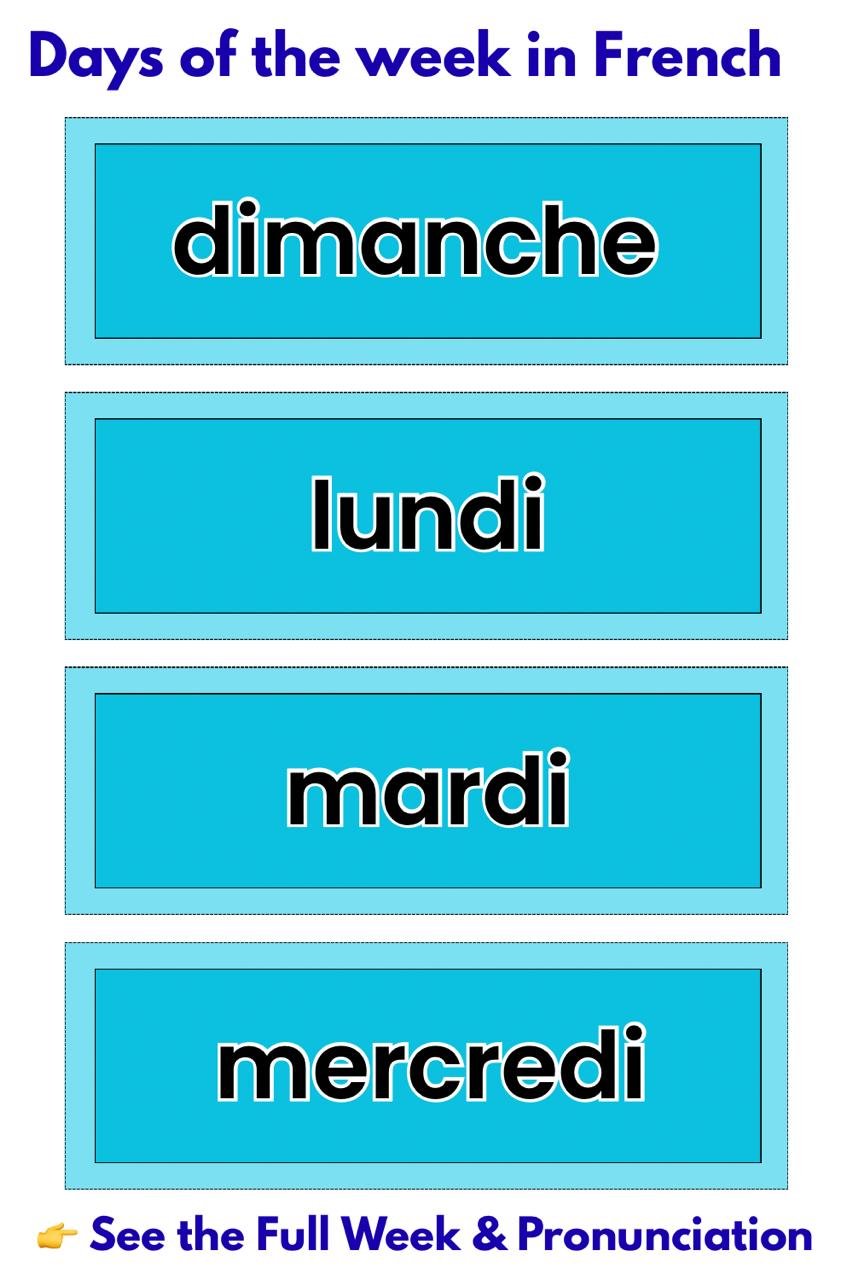
  • Days of the Week in French: Complete Guide to Les Jours de la Semaine

    Days of the Week in French: Complete Guide to Les Jours de la Semaine

    Welcome back to LingoMantra!


    If you are learning French, one of the first things you should master is the days of the week.

    Why? Because you will use them constantly.


    You need French days of the week when talking about your schedule, making appointments, booking a hotel, planning a trip, talking about work or school, or simply telling someone what you are doing tomorrow.


    In this complete beginner-friendly guide, you will learn:

    • All 7 days of the week in French
    • Their pronunciation
    • How to use each day in a sentence
    • Important French capitalization rules
    • How to say today, tomorrow, and yesterday
    • Useful expressions with French days
    • Common mistakes beginners make
    • A quick memory trick
    • A mini French quiz to test yourself

    So, let’s start!


    Days of the Week in French (Les Jours de la Semaine)
    The French word for day is jour, while the week is la semaine.

    So:

    Days of the week = Les jours de la semaine

    Here are all seven days:

    English French Approximate Pronunciation
    Monday lundi luhn-dee
    Tuesday mardi mar-dee
    Wednesday mercredi mehr-kruh-dee
    Thursday jeudi zhuh-dee
    Friday vendredi vahn-druh-dee
    Saturday samedi sam-dee
    Sunday dimanche dee-mahnsh
    Important: The pronunciations above are only approximate English guides. French pronunciation is easier to learn by listening and repeating rather than reading the English spelling.

    🔊 Pronunciation Practice

    1. Monday = Lundi
    • Pronunciation: Luhn-dee

    Say it three times:

    lundi — lundi — lundi

    Je travaille lundi.= I work on Monday.

    • 🔊 Listen to the audio below to practice


    2. Tuesday = Mardi
    • Pronunciation: Mar-dee

    Example:

    Je vais à Paris mardi.= I am going to Paris on Tuesday.

    You may notice that mardi looks and sounds somewhat similar to the English word “Tuesday” only in meaning, not pronunciation.

    Remember

    mardi = Tuesday

    Practice:

    mardi — mardi — mardi


    🔊 Listen to the audio below to practice:


    3. Wednesday = Mercredi
    • Pronunciation: mehr-kruh-dee
    • 🔊 Listen to the audio below to practice:

    This is one of the longer French day names, so beginners often find it difficult at first.

    Break it into parts:

    mer — cre — di

    Then say it naturally:

    mercredi

    Example:

    Nous avons un cours mercredi.= We have a class on Wednesday.

    Pronunciation Tip

    Don’t try to pronounce every letter exactly as you would in English. Listen to native French pronunciation and repeat the whole word.

    Practice:

    mercredi — mercredi — mercredi


    4. Thursday = Jeudi
    • Pronunciation: Zhuh-dee

    The beginning j has a soft sound similar to the sound in the middle of the English word “measure.”

    Example:

    Je joue au football jeudi.= I play football on Thursday.

    Easy Pronunciation Trick

    Think of:

    jeu + di → jeudi

    Practice:

    jeudi — jeudi — jeudi


    • 🔊 Listen to the audio below to practice


    5. Friday = Vendredi
    • Pronunciation: Vahn-druh-dee

    This is another longer day name, so don’t worry if it feels difficult initially.

    Break it into smaller parts:

    ven — dre — di

    Then combine them:

    vendredi

    Example:

    Nous sortons vendredi soir.= We are going out Friday evening.

    You will also hear:

    vendredi soir= Friday evening

    🔊 Pronunciation Practice

    Friday → vendredi

    Practice:

    vendredi — vendredi — vendredi

    • 🔊 Listen to the audio below to practice:


    6. Saturday = Samedi
    • Pronunciation: sam-dee

    Example:

    Je fais du sport samedi.= I exercise on Saturday.

    You may hear native speakers pronounce the word quite quickly, which can make it sound shorter than the spelling suggests.

    Remember

    samedi = Saturday

    Practice:

    samedi — samedi — samedi

    • 🔊 Listen to the audio below to practice:


    7. Sunday = Dimanche
    • Pronunciation: dee-mahnsh

    The final sound is different from what an English speaker might expect from the spelling.

    Example:

    Je me repose dimanche.= I rest on Sunday.

    Another useful expression is:

    dimanche matin= Sunday morning

    🔊 Pronunciation Practice

    Sunday → dimanche

    Practice:

    dimanche — dimanche — dimanche

    • 🔊 Listen to the audio below to practice:


    The 7 French Days — Quick Revision

    Before moving on, see if you can remember all seven without looking at the English translations.

    French → English

    lundi → Monday
    mardi → Tuesday
    mercredi → Wednesday
    jeudi → Thursday
    vendredi → Friday
    samedi → Saturday
    dimanche → Sunday

    Now try saying them from memory:

    lundi → mardi → mercredi → jeudi → vendredi → samedi → dimanche

    Great!

    You have just learned all seven days in French.


    Important Rules for French Days

    There are two important rules beginners should remember.

    Rule 1: French Days Are Not Usually Capitalized

    This is one of the biggest differences between English and French.

    In English:

    Monday, Tuesday, Wednesday

    In French:

    lundi, mardi, mercredi

    French days are normally written in lowercase.

    ✅ Correct:

    Je travaille lundi.

    ❌ Usually incorrect:

    Je travaille Lundi.

    The day can be capitalized if it appears at the beginning of a sentence, just like any other word.

    Rule 2: The French Week Starts on Monday

    In French-speaking contexts, the week is generally organized from:

    lundi → mardi → mercredi → jeudi → vendredi → samedi → dimanche

    So Monday (lundi) comes first.

    This is also why you will commonly see calendars in France beginning with Monday.

    How to Say “Today” in French

    Knowing the days is useful, but you also need a few basic time expressions.

    Today

    Aujourd’hui = Today

    Example:

    Aujourd’hui, c’est lundi.
    = Today is Monday.

    Tomorrow

    Demain = Tomorrow

    Example:

    Demain, c’est mardi.
    = Tomorrow is Tuesday.

    Yesterday

    Hier = Yesterday

    Example:

    Hier, c’était dimanche.
    = Yesterday was Sunday.

    Try remembering these three together:

    hier → aujourd’hui → demain

    yesterday → today → tomorrow


    How to Say “On Monday” in French

    Here’s another important point for beginners.

    When you want to say that something happens on a particular day, French commonly uses the day name directly.

    For example:

    Je travaille lundi.
    = I work on Monday.

    Nous étudions mardi.
    = We study on Tuesday.

    Je vais au cinéma vendredi.
    = I am going to the cinema on Friday.

    You don’t need to translate the English word “on” separately.


    Every Monday vs This Monday

    French has an interesting distinction.

    If you say:

    lundi

    it can mean Monday or on Monday, depending on context.

    But if you want to talk about something that happens every Monday, you can use:

    le lundi
    = every Monday / on Mondays

    Example:

    Je travaille le lundi.
    = I work on Mondays.

    Compare:

    Je travaille lundi.
    = I am working on Monday.

    Je travaille le lundi.
    = I work on Mondays.

    This small difference is extremely useful in everyday French.


    Useful French Expressions With Days

    Here are some expressions you can start using immediately.

    French
    lundi matin- Monday morning
    mardi soir- Tuesday evening
    mercredi après-midi- Wednesday afternoon
    vendredi soir- Friday evening
    samedi matin- Saturday morning
    dimanche- Sunday
    ce lundi- this Monday
    la semaine prochaine- next week
    la semaine dernière- last week

    Example Sentences

    Je travaille lundi matin.
    = I work Monday morning.

    Nous sortons vendredi soir.
    = We are going out Friday evening.

    Je fais du sport samedi matin.
    = I exercise Saturday morning.

    À lundi !
    = See you Monday!

    À demain !
    = See you tomorrow!


    A Simple Memory Trick

    Having trouble remembering the seven French days?

    Try grouping them.

    Group 1: Short Days

    lundi
    mardi
    jeudi

    Group 2: Longer Days

    mercredi
    vendredi

    Group 3: Weekend

    samedi
    dimanche

    And remember this sequence:

    L M M J V S D

    Or say it aloud:

    lundi → mardi → mercredi → jeudi → vendredi → samedi → dimanche

    Repetition is one of the easiest ways to make these words automatic.


    Can You Match Them?

    Test yourself before checking the answers.

    Question 1

    Which French word means Friday?

    A. mardi
    B. vendredi
    C. dimanche
    D. mercredi

    Question 2

    Which French word means Sunday?

    A. samedi
    B. jeudi
    C. dimanche
    D. lundi

    Question 3

    What does mercredi mean?

    A. Wednesday
    B. Monday
    C. Tuesday
    D. Saturday

    Question 4

    What does jeudi mean?

    A. Friday
    B. Thursday
    C. Tuesday
    D. Sunday


    Answers

    1. B — vendredi

    2. C — dimanche

    3. A — Wednesday

    4. B — Thursday

    How many did you get right?

    4/4? Excellent! 🎉

    3/4? Very good!

    2/4? Review the table once more.

    0–1/4? No problem. Practice makes progress!


    Fill in the Blanks

    Now let’s make it a little harder.

    Complete each sentence with the correct French day.

    1. Monday = _______

    2. Tuesday = _______

    3. Wednesday = _______

    4. Thursday = _______

    5. Friday = _______

    6. Saturday = _______

    7. Sunday = _______

    Answers

    1. lundi
    2. mardi
    3. mercredi
    4. jeudi
    5. vendredi
    6. samedi
    7. dimanche

    Don’t just read the answers.

    Try writing the seven words yourself from memory.

    That extra step helps you remember them much longer.


    French Days in a Real Conversation

    Let’s see how these words actually appear in a conversation.

    Conversation

    Marie: Tu travailles demain ?
    Paul: Oui, je travaille lundi.

    Marie: Et mardi ?
    Paul: Non, je suis libre mardi.

    English

    Marie: Are you working tomorrow?
    Paul: Yes, I work Monday.

    Marie: And Tuesday?
    Paul: No, I’m free Tuesday.

    Notice how naturally the day names appear in everyday conversation.

    Once you know the days, you can start building many useful sentences around them.

    Days of the Week + French Question Words

    Want to have a real conversation about days and schedules?

    Then your next step should be learning French question words.

    Words such as:

    • Quand ? = When?
    • Quel jour ? = Which day?
    • Pourquoi ? = Why?
    • Comment ? = How?
    • Où ? = Where?
    • Qui ? = Who?

    For example:

    Quand travailles-tu ?
    = When do you work?

    Quel jour est-ce ?
    = What day is it?

    Learning question words will help you move from simply memorizing vocabulary to actually asking and answering questions in French.

    👉 Continue learning: Learn the most important French Question Words and start building real French questions.

    Quick Cheat Sheet

    Save this section for revision.

    Day French
    Monday lundi
    Tuesday mardi
    Wednesday mercredi
    Thursday jeudi
    Friday vendredi
    Saturday samedi
    Sunday dimanche

    Essential Time Words

    hier = yesterday
    aujourd’hui = today
    demain = tomorrow

    Useful Expressions

    ce lundi = this Monday
    le lundi = every Monday / on Mondays
    vendredi soir = Friday evening
    samedi matin = Saturday morning
    à lundi ! = see you Monday!


    Final Practice Challenge

    Without looking above, can you write all seven French days in the correct order?

    Start here:

    1. ________
    2. ________
    3. ________
    4. ________
    5. ________
    6. ________
    7. ________

    Now say them aloud.

    If you can remember all seven without looking, you’re ready to start using them in simple French conversations.


    Final Thoughts

    Learning the days of the week may seem simple, but these seven words are part of the foundation of everyday French.

    Start by memorizing:

    lundi → mardi → mercredi → jeudi → vendredi → samedi → dimanche

    Then practice using them in complete sentences.

    For example:

    Je travaille lundi.
    Je suis libre mardi.
    Nous sortons vendredi soir.
    Je fais du sport samedi.

    The more you use these words in context, the faster they will become natural.

    And remember: French is not learned by memorizing words once. It is learned by using them again and again.

    🇫🇷 Keep practicing, keep speaking, and keep learning with LingoMantra!

    Next lesson: Learn French Question Words and discover how to ask who, what, when, where, why, and how in French.


    We hope this quick guide helps you speak French more confidently! Which French day do you find the hardest to pronounce? Let us know in the comments below.
    Don’t forget to bookmark LingoMantra for more daily language tips!


  • 5 Essential French Phrases Every Beginner Should Know 🇫🇷

    New to French? 🇫🇷 Start with these 5 easy phrases you can use in everyday conversations. Learn how to say them, when to use them, and practice them with a quick speaking challenge.

    These 5 essential French phrases are a great starting point for beginners. They can help you greet people, say thank you, make polite requests, ask how someone is doing, and say goodbye.

    In this quick lesson, you’ll learn how to understand, pronounce, and use each phrase naturally.

    Learn → Listen → Repeat → Practice

    📚 What You’ll Learn

    By the end of this quick lesson, you’ll know how to use:

    • Bonjour — Hello / Good morning
    • Merci — Thank you
    • S’il vous plaît — Please
    • Ça va ? — How are you?
    • Au revoir — Goodbye

    ⏱️ Estimated learning time: 5 minutes

    You’ll also get:

    • 🔊 One complete audio recording covering all 5 phrases
    • 💬 Everyday example sentences
    • 🧠 Easy memory tips
    • 🇫🇷 Useful cultural context
    • 🎯 A 5-minute speaking challenge

    ⏱️ Estimated learning time: 5 minutes

    🔎 Quick Navigation

    1. Bonjour · 2. Merci · 3. S’il vous plaît · 4. Ça va ? · 5. Au revoir


    🇫🇷 1. Bonjour — Hello / Good Morning

    • Meaning– Hello/Good morning
    • Pronunciation: bohn-zhoor

    💬 How to Use It

    Bonjour is one of the most useful French greetings.

    You can use it when greeting someone during the day, including when entering a shop, café, bakery, or other public place.

    In many everyday situations, starting with Bonjour is a simple way to be polite before asking for something.

    🧠 Easy Memory Tip

    Think of Bonjour as your everyday daytime greeting.

    Bonjour = Hello / Good morning

    ❓ Quick Check

    You enter a French café during the day. What can you say first?

    A) Au revoir
    B) Bonjour
    C) Merci

    Answer: B — Bonjour ✅


    🇫🇷 2. Merci — Thank You

    Meaning: Thank you

    Pronunciation: mehr-see

    💬 How to Use It

    Use Merci whenever you want to thank someone.

    It is one of the easiest French words to start using immediately.

    🗣️ Example

    🇫🇷 Merci !

    🇬🇧 Thank you!

    You can also say:

    🇫🇷 Merci beaucoup !

    🇬🇧 Thank you very much!

    🧠 Easy Memory Tip

    Merci = Thank you

    If someone helps you, gives you something, or answers your question, you can simply say Merci.

    💡 Try It Yourself

    Imagine someone gives you a cup of coffee.

    What would you say?

    🇫🇷 Merci !


    🇫🇷 3. S’il vous plaît — Please

    Meaning: Please

    Pronunciation: seel voo play

    💬 How to Use It

    S’il vous plaît is the polite form of “please.”

    You can use it when making a polite request, especially when speaking to someone you don’t know well or in a formal situation.

    🗣️ Example

    🇫🇷 Un café, s’il vous plaît.

    🇬🇧 A coffee, please.

    This is a very useful phrase when ordering something.

    🧠 Beginner Tip

    You’ll also hear:

    S’il te plaît — Please (informal)

    For now, remember:

    S’il vous plaît → polite/formal

    S’il te plaît → informal

    ❓ Quick Check

    Which phrase means “Please”?

    A) Merci
    B) S’il vous plaît
    C) Bonjour

    Answer: B — S’il vous plaît ✅


    🧠 Quick Check #1

    You’ve learned your first three phrases.

    Let’s see if you remember them.

    1. What does Merci mean?

    A) Please
    B) Thank you
    C) Goodbye

    2. Which phrase means “Hello”?

    A) Bonjour
    B) Au revoir
    C) Merci

    3. Complete the sentence:

    Un café, ___ .

    A) merci
    B) bonjour
    C) s’il vous plaît

    ✅ Answers

    1. B — Thank you

    2. A — Bonjour

    3. C — s’il vous plaît

    3/3? Excellent! Continue to the next two phrases.


    🇫🇷 4. Ça va ? — How Are You?

    Meaning: How are you? / Are you okay?

    Pronunciation: sah vah

    💬 How to Use It

    Ça va ? is a very common and friendly way to ask someone how they are doing.

    It is generally used in informal situations.

    One useful thing for beginners is that Ça va ? can also be answered with Ça va !

    🗣️ Example Conversation

    A: 🇫🇷 Ça va ?

    B: 🇫🇷 Oui, ça va !

    English:

    A: How are you?

    B: I’m good!

    🧠 Easy Memory Tip

    Ça va ? → How are you?

    Ça va ! → I’m good / I’m doing well.

    ✍️ Try It Yourself

    Someone asks:

    🇫🇷 Ça va ?

    You can answer:

    🇫🇷 Oui, ça va !


    🇫🇷 5. Au revoir — Goodbye

    Meaning: Goodbye

    Pronunciation: oh ruh-vwar

    💬 How to Use It

    Use Au revoir when saying goodbye to someone.

    You can use it when leaving a shop, café, workplace, or social interaction.

    🗣️ Example

    🇫🇷 Au revoir, à demain !

    🇬🇧 Goodbye, see you tomorrow!

    🧠 Easy Memory Tip

    Au revoir = Goodbye

    It’s a useful phrase to remember for almost any everyday situation where you’re leaving.

    ❓ Quick Check

    Which phrase would you use when leaving a café?

    A) Bonjour
    B) Merci
    C) Au revoir

    Answer: C — Au revoir ✅

    🔊 Listen to All 5 French Phrases

    Now that you’ve learned all five phrases, it’s time to hear them together.

    🎧 Listen to the complete recording once. Then play it again and repeat each phrase aloud.

    🗣️ Repeat After the Recording

    Bonjour.

    Merci.

    S’il vous plaît.

    Ça va ?

    Au revoir.

    Try saying all five phrases without looking at the pronunciation guides above.


    🎯 5-Minute French Speaking Challenge

    Don’t just read these phrases. Use them in a realistic situation.

    Imagine you’re visiting a French café.

    ☕ Situation 1 — You Enter

    The first thing you say:

    🇫🇷 Bonjour !

    ☕ Situation 2 — You Order

    You want a coffee:

    🇫🇷 Un café, s’il vous plaît.

    ☕ Situation 3 — You Receive Your Coffee

    You thank the person:

    🇫🇷 Merci !

    ☕ Situation 4 — Someone Asks How You Are

    They say:

    🇫🇷 Ça va ?

    You answer:

    🇫🇷 Oui, ça va !

    ☕ Situation 5 — You Leave

    You say:

    🇫🇷 Au revoir !

    ⭐ Your Challenge

    Now say the complete conversation out loud without looking at the English translations.

    This simple exercise helps turn the phrases you’ve learned into active speaking practice.


    🧠 One-Minute Memory Test

    Before moving on, try to remember all five meanings without looking back.

    Bonjour → ?

    Merci → ?

    S’il vous plaît → ?

    Ça va ? → ?

    Au revoir → ?

    🔓 Answers

    Bonjour → Hello / Good morning

    Merci → Thank you

    S’il vous plaît → Please

    Ça va ? → How are you?

    Au revoir → Goodbye

    If you remembered all five, you’re ready to start using them in simple French conversations.


    🇫🇷 Ready to Build Your Own French Sentences?

    Knowing useful phrases is a great first step. But if you want to start creating your own French sentences, you need to learn the most important French verbs.

    Continue with:

    👉 Top 10 Essential French Verbs for Beginners →

    Learn essential verbs such as être, avoir, aller, faire, pouvoir, vouloir, venir, voir, and prendre with simple everyday examples.


    📚 What Should You Learn Next?

    You’ve started building your French foundation. Now continue with these beginner-friendly resources.

    🔤 Essential French Verbs

    👉 Top 10 Essential French Verbs for Beginners →

    Learn the verbs you need to start creating simple French sentences.

    📖 Beginner-Friendly French Books

    👉 Top 5 French Books for Beginners →

    Discover beginner-friendly books to help you improve your French vocabulary, grammar, reading, and overall confidence.


    🇫🇷 Final Takeaway

    You don’t need to know a lot of French to start communicating.

    Start with these 5 essential phrases, practice their pronunciation, and use them whenever you get the opportunity.

    Bonjour, merci, s’il vous plaît, ça va, and au revoir are simple expressions, but they give you a useful foundation for everyday French.

    Keep practicing, keep speaking, and keep learning.

    À bientôt ! 🇫🇷